
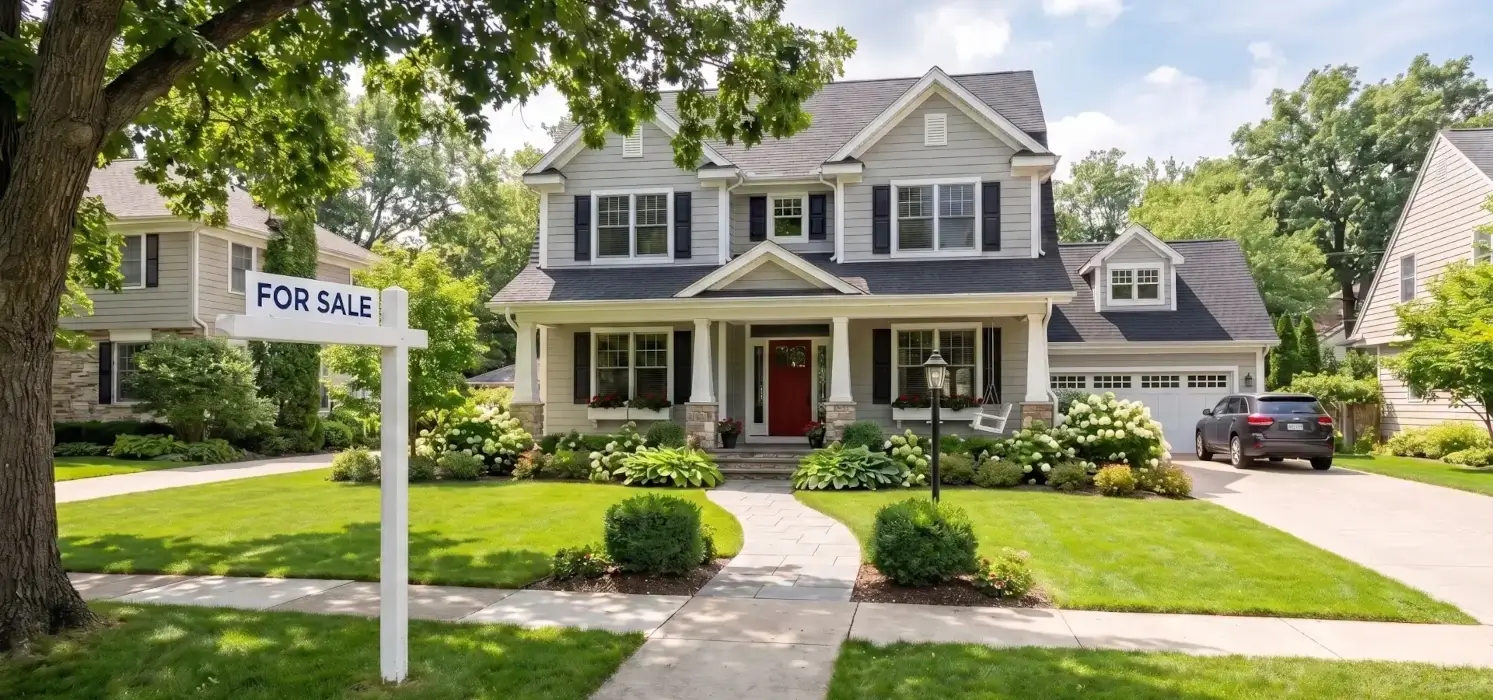
Getting Ready to Buy Market Real Estate
Smart Preparation Before You Start Searching
Purchasing a property is one of the biggest financial decisions you'll ever make. Preparing well before you start searching puts you in a stronger position when you find the right property.
Talk to a Market Buyer's AgentExplore
Let's Find Your Perfect Home
Whether you're a first-time homebuyer or an experienced investor, the decisions you make in the weeks before you start searching for property in Market significantly affect what you can buy, how strong your offers will be, and how smoothly the transaction goes. The buyers who get to closing without major surprises are almost always the ones who prepared well before they ever walked into a property.
This guide walks through the key things to consider before starting your Market property search — clarifying your "why," evaluating your financial readiness, organizing your documentation, and understanding the difference between pre-qualification and pre-approval.
Why Are You Buying?
Before anything else, get clear on why you're buying. Are you tired of paying rent? Have you outgrown your current home? Looking for an investment property to start building a portfolio? Buying a second home for vacations or future retirement?
Having a clear sense of your "why" helps you evaluate the right factors and choose the right property. The criteria that matter for a primary residence are different from the criteria that matter for a rental property. The criteria for a vacation home are different from a future retirement residence. Clarity on your purpose upfront prevents the common mistake of buying a property that doesn't actually match your goals.
Are You Ready to Invest?
Property ownership has been one of the top strategies for building wealth — and still is. Whether you're buying your first home and starting to build equity, or acquiring a rental property to generate income, real estate offers some of the most stable, predictable returns available.
Unlike stocks, collectibles, or other forms of investment, real estate is a tangible asset with multiple value drivers: appreciation, rental income, tax benefits, and equity buildup through mortgage paydown. For Market buyers specifically, the local market has historically rewarded patient ownership through both rental income and long-term appreciation.
Have questions about getting ready to buy? Complete the form and we'll be in touch.
Get In Touch
Get Your Finances in Order
The weeks before buying a property are not the time to make sudden career changes or large purchases. You want to approach your purchase from a position of financial stability — major financial moves can affect your credit and balance sheet in ways that limit your buying options or delay closing.
Your credit score significantly impacts what property you can buy, your interest rate, and your overall total cost. Before starting your search, get an updated credit report so you know where you stand. We can connect you with trusted Market lenders across residential, construction, and investment real estate financing who can pull current credit data and walk you through what your position means for your buying power.
When you find the right property and are ready to make an offer, you'll want to move quickly. Having your documentation organized in advance prevents delays and strengthens your offer position. Typical documentation includes:
- 01Recent pay stubs and bank account statements
- 02Financial statements showing assets and liabilities
- 03Investment account and 401(k) statements
- 04Tax returns for the past two years
- 05Information on credit cards, auto loans, and other debts
- 06Life insurance policies, stocks, bonds, and mutual fund information
- 07Copies of leases for any existing investment properties
For investment property buyers, expect lenders to also request rent rolls, profit and loss statements, and operating expense documentation for any current rental properties.
Need help thinking through your readiness to buy? Complete the form above and we'll set up a consultation.
Pre-Qualified vs. Pre-Approved
These terms get used interchangeably, but they mean very different things:
Pre-Qualification is a preliminary estimate of what you might be able to borrow based on basic financial information you provide to a lender — typically a quick conversation or online form. It's useful for getting a rough sense of your buying range but carries little weight with sellers.
Pre-Approval is a formal underwriting evaluation where the lender reviews your actual financial documentation, runs your credit, and commits to lending up to a specific amount subject to property-specific factors. A pre-approval letter is what sellers want to see when evaluating offers
Pre-approval helps you with:
- Finding the ideal price range you can actually afford
- Knowing your monthly payment with reasonable accuracy
- Understanding which loan types you qualify for
- Estimating your down payment and closing costs
- Making competitive offers when you find the right property
Get pre-approved before you start seriously looking. It costs nothing, takes a few days, and dramatically strengthens your position when you find the property you want.
Tips For Buying in Market

Don’t Max Out Your Budget
Just because you've been approved for a maximum amount doesn't mean you should spend it all on purchase price. Set aside funds for closing costs, taxes, potential home repairs, and remodeling. A property purchase that stretches your budget to the limit leaves no margin for the unexpected.

Get To Know The Area
Make sure the neighborhood works for your situation. Schools, commute distances, shopping access, walkability, noise levels, and neighborhood character all matter. Drive the area at different times of day. Talk to neighbors. Understand what living there actually feels like before you commit.

Don’t Skip The Inspection
Inspections are worth their weight in gold. They identify problems you might not otherwise notice, give you peace of mind, and let you make informed decisions about your purchase. Even on newer homes, inspections regularly find issues worth thousands of dollars to address.

Get Pre-Approved
A pre-approval letter signals to sellers that you're serious and ready to close — not just window shopping. In competitive Market markets, pre-approval is often the difference between an accepted offer and a rejected one.

Make a List of Deal Breakers
Know what you can live with and what you can't. Distinguish between things a simple remodel can fix and things that would require major (and expensive) changes. If you need a 4-bedroom home, don't buy a 2-bedroom that requires a massive addition. Stay disciplined about your must-haves.

Check the Age of Major Systems
Some of the most expensive features of a home are the appliances, HVAC, water heater, septic/well systems (where applicable), and roof. Pay attention to their age and service history during your evaluation. Older systems mean impending replacement costs. In some cases, you can negotiate a home warranty into the deal to provide coverage for the first year.

Check For HOA Requirements
Many Market neighborhoods have HOAs that govern what you can and can't do with the property — exterior modifications, landscaping, vehicle storage, rental restrictions, and more. Understand the HOA rules and the associated fees before you commit. HOA fees are typically annual and can range from a few hundred dollars to thousands depending on the community and amenities.

For Investment Property Buyers
If you're buying a rental property instead of a primary residence, the financial preparation looks similar but with some additional considerations:
- Down payment requirements are typically higher for investment properties — often 20-25% versus 3-20% for primary residences
- Interest rates are usually 0.5-0.75% higher on investment property loans
- Cash reserves of 6+ months of mortgage payments are commonly required
- Cash flow analysis matters more than personal affordability — the property needs to perform as an investment
- Existing rental income from other properties counts toward your borrowing capacity once you have 2+ years of landlord history
Our team handles both homebuyers and investors, and we can walk you through what makes a Market property work as a rental versus what makes one work as a primary residence. They're not always the same things.

Common Questions From Market Buyers
-
The timeline depends on the lender — generally within a few business days, sometimes faster for expedited pre-approval.
-
A formal pre-approval includes a hard credit pull, which can affect your score by a few points temporarily. The impact is minimal and well worth it for the buying advantage pre-approval provides.
-
Most pre-approval letters are valid for 60-90 days. If your search takes longer, the lender will need to update your documentation and re-issue the letter.
-
Yes. Credit bureaus typically treat multiple mortgage inquiries within a 14-45 day window as a single inquiry, so you can compare rates across multiple lenders without significantly affecting your credit score.
-
Yes. We have established relationships with seasoned Market lenders across residential, construction, and investment real estate financing. We're happy to make introductions.